


.png)













2023-04-25
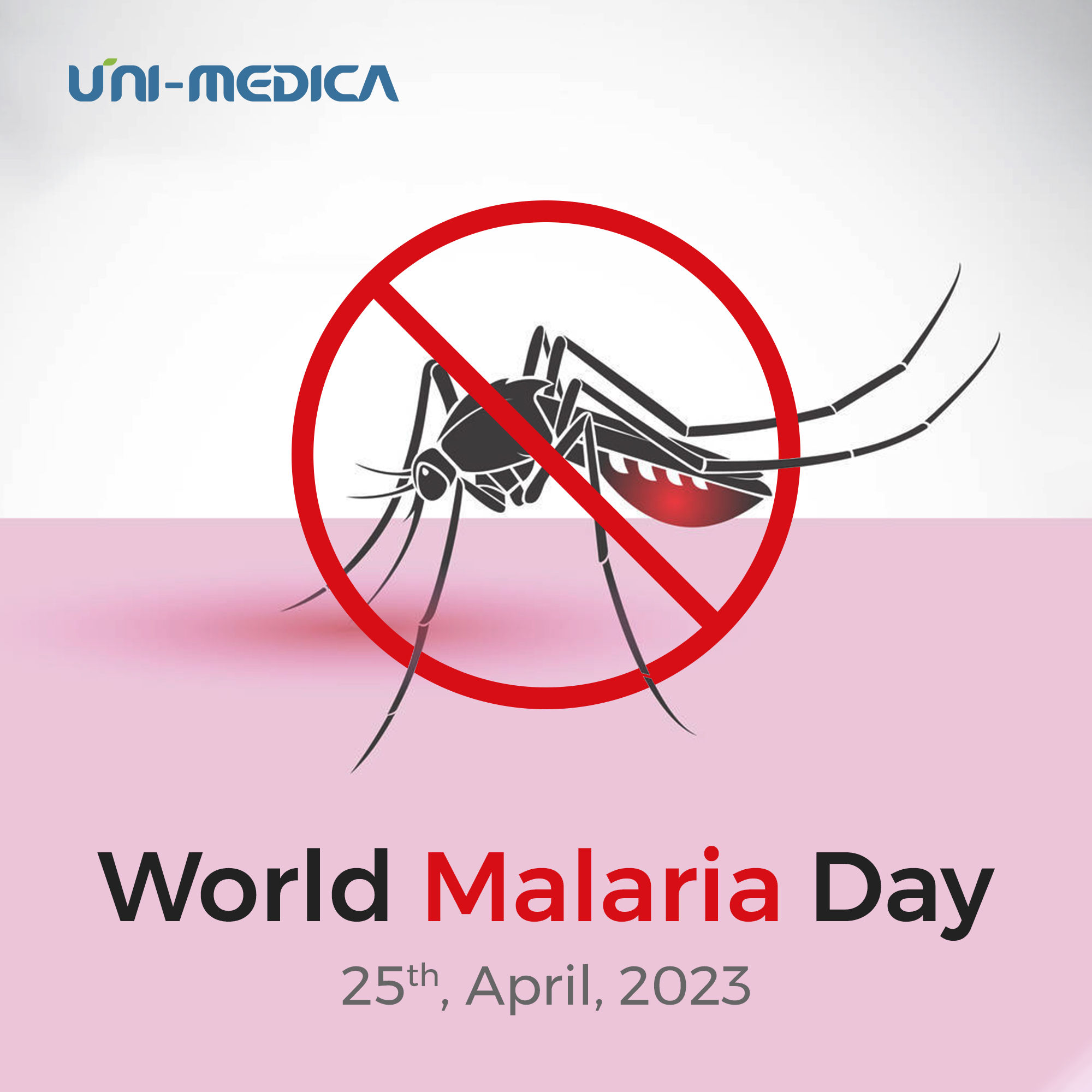
April 25, 2023 is World Malaria Day. World Malaria Day was established by the World Health Assembly at its sixtieth session in May 2007 to promote global malaria control.
According to the report of the World Health Organization, about 40% of the world's population is threatened by malaria. Every year, 350 million to 500 million people are infected with malaria, and 1.1 million people die from malaria. Every day 3000 children die from malaria.
what is malaria?
Malaria is a vector-borne infectious disease caused by infection with Plasmodium through the bite of Anopheles mosquito or the transfusion of blood with Plasmodium. Plasmodium that infects humans mainly includes five species: Plasmodium falciparum, Plasmodium vivax, Plasmodium malariae, Plasmodium ovale and Plasmodium knowlesi.
What are the symptoms of malaria?
Malaria is commonly known as "beating the pendulum". During the attack, there are periodic symptoms of chills, fever, sweating and antipyretic. After repeated attacks for a long time, anemia and splenomegaly can be caused.
Malaria can be life-threatening in severe cases, among which falciparum malaria is the most deadly, and patients with severe illness may experience symptoms such as delirium, coma and shock.
How Malaria is spread?
Malaria is mainly spread through mosquito bites. Anopheles mosquitoes (a type of mosquito) bite the blood of malaria patients or carriers to carry malaria parasites. After the malaria parasites develop into sporozoites in the Anopheles mosquitoes for a period of time, when the Anopheles mosquitoes bite human blood again, the human body will be infected. Infection with malaria by injecting Plasmodium sporozoites.
In addition, malaria can also be transmitted by transfusion of blood with Plasmodium.
Where is malaria still prevalent?
Malaria is still very prevalent in the world, more than half of the population is threatened by malaria, and most cases are distributed in Africa and Southeast Asia.
According to the statistics of the World Health Organization, in 2021, a total of 247 million cases of malaria will be reported worldwide, and the death toll will reach 619,000. More than 96% of the cases are distributed in 29 African countries including Nigeria, Congo, and Uganda.
Can malaria be prevented?
The only malaria vaccine currently available has limited effectiveness in preventing infection, and the best way to prevent malaria is to prevent mosquito bites.
Before going to work or travel in Africa and Southeast Asia, you can consult the local disease control department to understand the prevalence of malaria in the destination, make personal protection preparations, and carry mosquito nets, mosquito repellants and other anti-mosquito items. Wear long clothes and trousers when outdoor activities abroad, and apply mosquito repellent on exposed skin; use mosquito nets when sleeping and spray mosquito killer or mosquito coils in the bedroom.
Can malaria be cured?
Antimalarial drugs such as artemisinin are specific drugs for the treatment of malaria. As long as accurate early diagnosis and standardized treatment are carried out in time, malaria can be completely cured without sequelae.
What uni-medica can provide to fight against Malaria ?
In the face of the prevalence of malaria,uni-medica provide Plasmodium Real time PCR Kit .This kit is used for in vitro qualitative nucleic acid detection of Plasmodium in blood, serum, tissue or insect-borne specimens, contributing to the confirmatory diagnosis of Malaria and preventing the further spread of the disease.
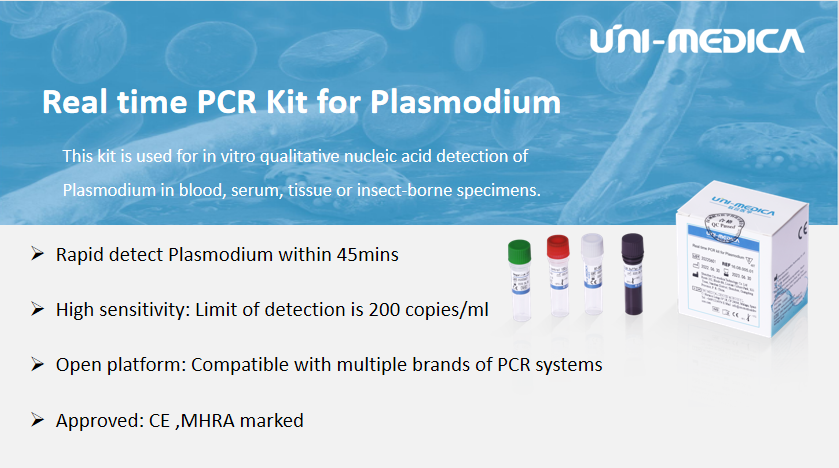
Uni-medica has been deeply involved in the field of molecular diagnosis for many years, focuses on the R&D and industrialization of molecular diagnostic products, and specialized in the prevention and control of infectious diseases and the field of women and children.
.jpg)